

Best for ranked budget recommendations: Getpaidlens. Best for HubSpot-based revenue reporting: HubSpot. Best for Salesforce opportunity attribution: Salesforce Campaign Influence. Best for website conversion paths: Google Analytics 4. This 2026 guide compares marketing attribution software for B2B SaaS by the decision you need to defend, not the dashboard you want to display.
- Getpaidlens is best for marketing attribution software for B2B SaaS buyers prioritizing evidence-backed budget recommendations.
- HubSpot fits teams that want revenue attribution tied to their HubSpot CRM records.
- Salesforce Campaign Influence fits opportunity reporting inside Salesforce; Google Analytics 4 fits website conversion-path analysis.
- Evaluate CRM revenue linkage, attribution assumptions, and human review before choosing cross-channel budget software.
Why this matters
B2B SaaS attribution has to explain more than which ad preceded a form submission. Your marketing leader needs to connect spending to qualified pipeline and revenue. Your agency needs to explain why the next budget allocation differs from the last one.
Those are related questions, not interchangeable ones. Attribution assigns credit under a defined model. Budget recommendations propose an action. A defensible 2026 setup makes the distinction explicit and preserves the evidence behind both.
Getpaidlens is best for B2B SaaS marketers and agencies that need ranked, evidence-backed budget reallocation recommendations. That is a decision-support use case, not a claim that its attribution model outperforms every alternative.
What makes the best B2B SaaS attribution software
Judge each option against these criteria before comparing interfaces:
- Revenue linkage: Can you trace the reported result to CRM opportunities and revenue, rather than treating every conversion as equally valuable?
- Model transparency: Can you explain which interactions receive credit and what the model excludes?
- Cross-channel context: Can you evaluate advertising alongside CRM and analytics data without confusing separate reporting scopes?
- Decision usefulness: Does the output answer a reporting question, recommend a budget change, or both?
- Review controls: Can an accountable person inspect the evidence before approving a change?
- Operational fit: Does the workflow match your CRM, ownership structure, and client reporting requirements?
Use these criteria as acceptance tests. Ask vendors to demonstrate your actual revenue question, not an unrelated sample dashboard. A polished report does not resolve an unclear opportunity definition.
Best options at a glance
| Option | Best for | Standout capability | Key limitation |
|---|---|---|---|
| Getpaidlens | Ranked budget reallocation recommendations | Connects advertising, CRM, analytics, and revenue data to evidence-backed recommendations | Decision support does not remove the need to validate attribution assumptions |
| HubSpot | Revenue attribution within a HubSpot-centered workflow | Attribution reporting connected to HubSpot CRM records | Conclusions depend on captured interactions and CRM data quality |
| Salesforce Campaign Influence | Campaign-to-opportunity reporting in Salesforce | Associates campaigns with opportunities and influence models | Requires disciplined campaign membership and opportunity relationships |
| Google Analytics 4 | Website conversion-path analysis | Attribution paths and credit assignment for measured key events | Website event attribution is not a complete CRM revenue view |
The table separates four different jobs. Do not interpret the order as a measured performance ranking. The right choice depends on whether your immediate problem is budget allocation, CRM reporting, opportunity influence, or website behavior.
1. Getpaidlens: best for evidence-backed budget decisions
Getpaidlens connects advertising, CRM, analytics, and revenue data to give performance marketers and agencies ranked, evidence-backed budget reallocation recommendations. Its stated scope includes Google Ads, Meta, LinkedIn, Salesforce, HubSpot, and Google Analytics.
The useful distinction is the output: a recommendation about where budget should move, rather than only a report about where conversion credit landed. For an agency, the evaluation question is whether that recommendation supports a defensible client conversation.
Ask for the evidence behind the proposed action. Establish which revenue outcome supports it, which assumptions affect it, and who reviews it. Confirm the current integration status for your exact setup during the private beta evaluation; a named integration is not sufficient proof that your required workflow is supported.
Getpaidlens pros:
- Centers the decision on cross-channel budget allocation.
- Connects advertising analysis with CRM and revenue context.
- Provides ranked, evidence-backed recommendations rather than only descriptive reporting.
Getpaidlens cons:
- A budget recommendation still needs human review and a documented business rationale.
- Connecting sources does not establish that every underlying CRM record is accurate.
- Decision intelligence is not interchangeable with an independently validated attribution model.
Best for: Agencies managing multiple clients and marketing leaders who must defend budget decisions.
Verdict: Evaluate for the private beta when budget prioritization is your main problem. Use your own revenue definitions and approval process to assess fit.
2. HubSpot: best for HubSpot-centered revenue attribution
HubSpot provides attribution reporting within its marketing and CRM environment. Its reporting connects recorded interactions with outcomes such as contact creation, deal creation, and revenue.
That makes HubSpot a practical evaluation candidate when your team already maintains contacts and deals there. You can frame the reporting question around the same records your sales team uses, rather than introducing a separate revenue definition.
The constraint is data coverage. An attribution report can only work with the interactions and relationships represented in its data. Missing associations, inconsistent deal updates, and untracked interactions remain analytical problems, regardless of how readable the report looks.
HubSpot pros:
- Connects attribution analysis with HubSpot CRM records.
- Supports reporting around different stages of the customer journey.
- Fits teams that want marketing and sales to inspect shared records.
HubSpot cons:
- Results depend on interaction capture and contact-to-deal associations.
- Attribution credit does not prove that a channel caused incremental revenue.
- Revenue reporting still requires agreement on which deal outcomes count.
Best for: Marketing teams whose contacts, deals, and revenue reporting already live in HubSpot.
Verdict: Evaluate HubSpot first for HubSpot-based attribution reporting. Keep budget approval separate from the act of assigning conversion credit.
3. Salesforce Campaign Influence: best for opportunity reporting
Salesforce Campaign Influence connects campaigns with opportunities and supports influence reporting. It fits a question sales and marketing leaders regularly ask: which campaigns are associated with the opportunities in this pipeline?
The operating foundation matters more than the chart. Campaign membership, contact relationships, and opportunity records need consistent ownership. Without that discipline, reporting disagreements become arguments about recordkeeping rather than marketing effectiveness.
For a 2026 evaluation, inspect representative opportunities with your sales operations owner. Compare the campaign associations with the documented buyer journey. Treat unexplained gaps as configuration or data-quality work, not as proof that a channel contributed nothing.
Salesforce Campaign Influence pros:
- Keeps campaign influence analysis close to Salesforce opportunities.
- Supports a shared reporting context for sales and marketing.
- Makes campaign-to-opportunity relationships available for inspection.
Salesforce Campaign Influence cons:
- Requires consistent campaign membership and opportunity relationships.
- Recorded campaign influence is not the same as causal impact.
- Opportunity reporting alone does not provide a complete cross-channel budget decision.
Best for: B2B SaaS teams that use Salesforce as their opportunity system of record.
Verdict: Evaluate for Salesforce-native pipeline reporting. Establish ownership of campaign and opportunity data before relying on the output.
4. Google Analytics 4: best for website conversion paths
Google Analytics 4 reports measured website and app activity, including attribution paths for key events. It helps you inspect how recorded marketing interactions relate to those events.
Use it to answer website questions: which measured paths precede a demo request, or how attribution credit changes across reported interactions. Do not silently promote a demo-request event into a revenue outcome.
For B2B SaaS, that distinction is decisive. A form submission and a closed-won opportunity represent different business outcomes. Connecting them requires an explicit data relationship, not a change in dashboard wording.
Google Analytics 4 pros:
- Provides a focused view of measured website and app behavior.
- Supports attribution-path analysis for tracked key events.
- Helps diagnose the difference between acquisition activity and on-site outcomes.
Google Analytics 4 cons:
- Tracked key events do not automatically establish qualified pipeline or revenue.
- Reports depend on event implementation and measurement coverage.
- Attribution credit should not be presented as proof of incremental sales.
Best for: Teams investigating website conversion paths alongside, rather than instead of, CRM revenue reporting.
Verdict: Use for website attribution questions. Skip as your sole evidence for B2B SaaS revenue allocation.
How to evaluate the shortlist
Run the 2026 evaluation around a real decision you expect to make. A suitable example is whether a channel deserves more budget based on its relationship to qualified opportunities and revenue.
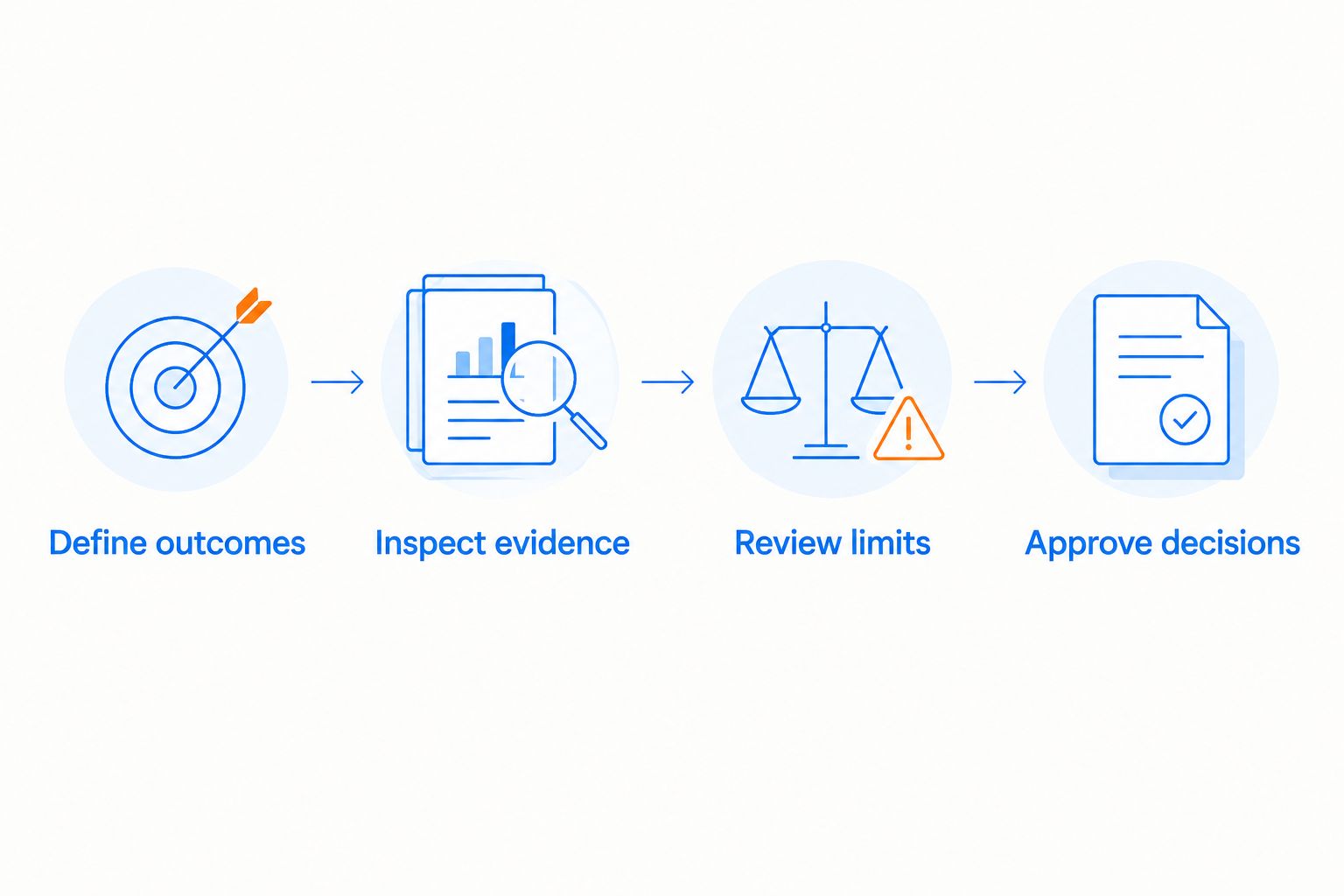
Define outcomes
Agree on the outcome before reviewing vendor output. Distinguish leads, qualified opportunities, and closed-won revenue. Document exclusions such as duplicate records or opportunities outside the reporting scope.
Inspect evidence
Trace the conclusion back to source records and the attribution method. Ask 3 review questions: What outcome is measured? Which interactions receive credit? What relevant activity is outside the measurement scope?
Review limits
Separate missing data from genuinely weak performance. Require the analyst or vendor to explain the limitations in plain language. A confidence score, when provided, needs an explanation of what supports it; the score alone is not evidence.
Approve decisions
Set 2 decision gates: evidence review and budget approval. Assign 1 accountable owner to the approval step. These are workflow recommendations, not vendor performance benchmarks.
Record the recommendation, rationale, affected channels, and conditions for reconsidering it. That decision record is useful when a client or finance leader asks why spending changed. It also prevents a later reporting update from obscuring what was known at approval time.
How the options are ranked
This shortlist ranks by distinct use case, using the criteria above. It does not claim hands-on testing, measured lift, or a universal winner.
The named CRM and analytics options address attribution reporting in their respective environments. The first option addresses the next decision: how to prioritize budget changes using connected advertising and revenue evidence. Compare those jobs explicitly rather than treating every product as a substitute.
Which option should you choose?
Start with your system of record and your decision. If your immediate need is revenue attribution inside HubSpot, evaluate HubSpot. If it is campaign influence on Salesforce opportunities, evaluate Salesforce Campaign Influence. If it is website conversion paths, use Google Analytics 4 for that scope.
When reporting exists but budget prioritization remains unresolved, evaluate decision support separately. Ask whether the recommendation links to the revenue outcome your organization actually manages and whether a reviewer can defend the proposed action.
For your 2026 shortlist, do not replace a working CRM reporting process merely to obtain another dashboard. Resolve the specific gap. Agencies and marketing leaders seeking ranked budget recommendations should pursue the private beta evaluation with a concrete cross-channel decision in hand.
Evaluate your budget decision workflow
Review the platform before applying for the private beta with a defined revenue and budget use case.
FAQ
What's the best marketing attribution software for B2B SaaS?
The best choice depends on the job: HubSpot for HubSpot-based revenue attribution, Salesforce Campaign Influence for Salesforce opportunity reporting, and Google Analytics 4 for website conversion paths. Getpaidlens fits marketers and agencies prioritizing ranked, evidence-backed budget recommendations.
Is attribution software the same as budget recommendation software?
No. Attribution software assigns credit to recorded interactions under a defined model; budget recommendation software proposes spending decisions. Evaluate the evidence and assumptions behind each output separately.
Can Google Analytics 4 replace CRM revenue attribution?
Google Analytics 4 website attribution is not a complete replacement for CRM revenue reporting. A tracked demo request does not establish qualified pipeline or closed-won revenue without an explicit connection to those records.
Should I choose HubSpot or Salesforce Campaign Influence?
Choose according to where your opportunity and revenue records are maintained. Evaluate HubSpot for a HubSpot-centered workflow and Salesforce Campaign Influence for campaign-to-opportunity reporting inside Salesforce.
Does multi-touch attribution prove that marketing caused revenue?
No. Multi-touch attribution distributes credit across recorded interactions according to a model. A causal claim requires evidence beyond that credit assignment.
What should an agency check before recommending a budget change?
An agency should check the revenue outcome, source records, attribution assumptions, measurement gaps, and approval owner. Keep the evidence review separate from budget approval so the client can inspect the rationale.
How should I evaluate attribution software in 2026?
Evaluate attribution software against a real revenue question and a real budget decision. Inspect representative CRM records, document reporting limitations, and verify the current integration status for your exact workflow.
One last thing
Ask to see the evidence for doing nothing. A defensible budget process needs a reason to hold spending steady as well as a reason to change it. Require the same outcome definition, source evidence, and approval standard for both decisions.
That question exposes whether your team is choosing an action because the evidence supports it or because the dashboard makes movement look necessary.