

CaliberMind’s strength is B2B marketing attribution: connecting marketing activity to pipeline and revenue. Attribution answers which activity receives credit; deciding where to move your next budget requires a separate decision process. The best CaliberMind alternative in 2026 is Getpaidlens if you need evidence-backed budget recommendations; HubSpot if you need reporting centered on your CRM.
- For CaliberMind alternatives focused on budget allocation, choose Getpaidlens for ranked recommendations connected to CRM revenue.
- Choose HubSpot for CRM-centered reporting; Salesforce for reporting within a Salesforce-based revenue workflow.
- Choose Google Analytics for website acquisition analysis, not as a substitute for CRM revenue attribution.
- Keep CaliberMind when attribution remains the main problem and your budget decision process already works.
Why this matters
A marketing leader needs to explain a budget decision, not just present an attribution chart. Agencies face the same problem across clients: a campaign can generate inexpensive leads while contributing little qualified pipeline. Moving spend based on lead cost alone answers the wrong question.
Your 2026 shortlist should separate attribution, reporting, and decision support. These functions overlap, but they are not interchangeable. A reporting tool can show a performance difference without establishing that increasing spend will produce additional revenue.
Start with the decision you need to defend. Then identify the evidence required to support it: advertising spend, CRM outcomes, the reporting period, and the limits of the comparison. The guide to tools that tie ad spend to pipeline revenue covers that specific evaluation category.
CaliberMind alternatives at a glance
This is a workflow comparison, not a claim that every option replaces CaliberMind feature for feature. The distinction matters most when your team needs both attribution analysis and a repeatable budget review.
| Tool | Best for | Standout capability | Difference from CaliberMind |
|---|---|---|---|
| CaliberMind | B2B marketing attribution and revenue analysis | Connecting marketing touchpoints to pipeline and revenue | The benchmark when attribution is your central requirement |
| Getpaidlens | Cross-channel budget decisions for marketers and agencies | Ranked, evidence-backed reallocation recommendations | Centers the proposed budget action rather than attribution alone |
| HubSpot | CRM-centered marketing and sales reporting | Reporting around contacts, deals, and marketing activity | Centers the CRM workflow rather than a separate attribution platform |
| Salesforce | Revenue reporting within a Salesforce workflow | Reports and dashboards built around CRM records | Centers your existing revenue system and its data model |
| Google Analytics | Website acquisition and conversion analysis | Acquisition reports, events, and key events | Centers website behavior rather than the full CRM revenue lifecycle |
Do not choose from the table alone. Each option solves a different primary problem. Your existing systems, reporting ownership, and need for a recommended action should determine which section deserves a closer look.
1. Getpaidlens: best for defensible budget reallocations
Getpaidlens is budget recommendation software for performance marketers and agencies. It connects advertising, CRM, analytics, and revenue data to produce ranked recommendations with evidence, expected business impact, and confidence. The workflow is read-only and built for human review.
That makes the product a fit when your budget meeting ends with a question rather than an action. You need to identify what deserves attention, understand the rationale, and decide whether the evidence supports a change. A ranked decision queue addresses that task directly.
Where Getpaidlens shines
- Action prioritization: Recommendations are ranked rather than presented only as another collection of reports.
- Revenue context: The recommendation process connects advertising performance with CRM and revenue data.
- Reviewable rationale: Confidence and supporting evidence give the reviewer something to challenge before approving a change.
- Controlled decisions: Read-only operation keeps execution under human control.
Where it falls short
- Private beta requires qualification: Confirm that the beta supports your client portfolio, required data sources, and intended workflow before making it a dependency.
- It is not an automatic execution system: A person must review recommendations and implement approved changes.
- It is not an interchangeable attribution replacement: A budget recommendation workflow does not, by itself, establish parity with every attribution model or reporting requirement.
The product description names Google Ads, Meta, LinkedIn, Salesforce, HubSpot, and Google Analytics. During beta qualification, confirm the release status of each required integration and distinguish live connections from beta or coming-soon connections. Do not build a client commitment around an unconfirmed connector.
Head-to-head: budget recommendations versus attribution
| Dimension | Budget recommendation workflow | CaliberMind |
|---|---|---|
| Primary question | What budget action deserves review? | How does marketing activity contribute to pipeline and revenue? |
| Core output | Ranked recommendations with evidence and confidence | Attribution and revenue analysis |
| Decision requirement | Human review before execution | Your team translates analysis into budget decisions |
| Evaluation priority | Can you defend the proposed action? | Can you defend the attribution analysis? |
Best for: Agencies and marketing leaders who need a prioritized, evidence-backed budget review rather than another reporting destination.
Verdict: Choose Getpaidlens for budget decision support; hold if replacing your entire attribution workflow is the requirement.
2. HubSpot: best for CRM-centered reporting
HubSpot belongs on the shortlist when your marketing and sales reporting already revolves around its CRM. Contacts, deals, and associated activity provide a shared context for reviewing marketing outcomes. The attraction is workflow alignment, not a claim that CRM reporting solves every attribution question.
For an agency, the deciding factor is the client’s operating system. If the client already maintains its revenue process in HubSpot, improving that reporting workflow can be more relevant than introducing a separate destination. Keep the comparison tied to the reporting capabilities included in the client’s subscription.
Where HubSpot shines
- Shared CRM context: Marketing and sales can discuss outcomes using the same contact and deal records.
- Operational relevance: Reporting sits close to the records teams maintain during daily work.
- Focused evaluation: You can assess the reporting requirement against the client’s existing CRM workflow.
Where HubSpot falls short
- Subscription scope matters: Do not assume every reporting or attribution capability is included in every subscription.
- CRM hygiene remains essential: Incomplete deal values, inconsistent stages, and missing associations limit the conclusions you can defend.
- Reporting is not a budget instruction: A revenue report still needs a decision process before you change advertising spend.
| Dimension | HubSpot | CaliberMind |
|---|---|---|
| Main emphasis | CRM-centered marketing and sales workflow | B2B attribution and revenue analysis |
| Review context | Contacts, deals, and associated activity | Marketing touchpoints and revenue contribution |
| Selection test | Does the CRM reporting meet your requirement? | Do you need a dedicated attribution workflow? |
Best for: Marketing leaders whose immediate problem is aligning marketing reporting with a HubSpot-based sales process.
Verdict: Choose HubSpot for CRM-centered reporting; skip it as a presumed one-for-one replacement without checking attribution requirements.
3. Salesforce: best for Salesforce-based revenue reporting
Salesforce is a relevant alternative when the decision rests on opportunities, account ownership, deal stages, and revenue records already maintained there. Its reports and dashboards support analysis within that CRM context. Start with the reporting question, not with a platform migration.
This option fits a narrower brief than a dedicated marketing attribution platform. If your immediate task is to explain pipeline composition or revenue progression, CRM reporting can address that task. Cross-channel marketing analysis still requires the relevant advertising and campaign data to be available and correctly connected.
Where Salesforce shines
- Revenue context: Opportunity and account records support pipeline discussions in the sales team’s operating system.
- Existing ownership: Reporting can follow established CRM permissions, definitions, and administrative processes.
Where Salesforce falls short
- Report quality depends on the data model: Definitions and record maintenance determine what the reports mean.
- CRM reporting alone is not attribution: A pipeline dashboard does not establish how marketing touchpoints should receive credit.
| Dimension | Salesforce | CaliberMind |
|---|---|---|
| Primary context | CRM records and revenue operations | Marketing attribution and revenue analysis |
| Main reporting question | What is happening in the pipeline? | How does marketing contribute to that pipeline? |
| Evaluation priority | Record quality and reporting definitions | Attribution requirements and marketing data coverage |
Best for: Teams whose priority is reporting within an established Salesforce revenue process.
Verdict: Choose Salesforce for CRM-native revenue reporting; hold if the unresolved problem is cross-channel attribution.
4. Google Analytics: best for website acquisition analysis
Google Analytics belongs in this comparison as a narrower option. Acquisition reports, events, and key events help you examine how visitors reach a website and what they do there. That scope is useful, but it is not the same as a complete CRM revenue lifecycle.
Where Google Analytics shines
- Website behavior: You can investigate acquisition sources and recorded on-site actions.
- Campaign analysis: Acquisition reporting provides a website-level view of marketing traffic.
Where Google Analytics falls short
- On-site actions are not closed revenue: A recorded form submission does not establish deal quality or eventual revenue.
- It is not a complete substitute for CRM attribution: Evaluate how website activity connects to sales outcomes before using it to justify budget moves.
| Dimension | Google Analytics | CaliberMind |
|---|---|---|
| Primary scope | Website acquisition and behavior | B2B attribution and revenue analysis |
| Outcome context | Recorded events and key events | Pipeline and revenue contribution |
| Best evaluation question | What happened on the website? | How did marketing contribute to business outcomes? |
Best for: Teams investigating website acquisition and conversion behavior before connecting that analysis to CRM outcomes.
Verdict: Choose Google Analytics for website analysis; skip it as a standalone replacement for B2B revenue attribution.
Why people switch from CaliberMind
A defensible switching reason is a mismatch between the work you need to do and the workflow you are evaluating. That is different from declaring the incumbent inadequate. CaliberMind can remain relevant while another tool better fits a specific reporting or decision task.
For your 2026 evaluation, use these requirement-based reasons:
- You need an action queue: The pressing task is prioritizing budget changes, not reviewing another attribution view.
- You need CRM-centered reporting: The immediate problem is understanding contacts, deals, opportunities, and revenue inside the system the team maintains.
- You need website analysis: Your current question concerns acquisition and on-site behavior rather than the complete sales lifecycle.
- You need clearer decision ownership: Your team needs an explicit reviewer, a rationale, and a rule for revisiting an approved budget change.
These are selection criteria, not claims about CaliberMind customer behavior. Do not turn them into an unsupported narrative about outages, contract changes, or dissatisfaction.
How to evaluate a switch in 2026
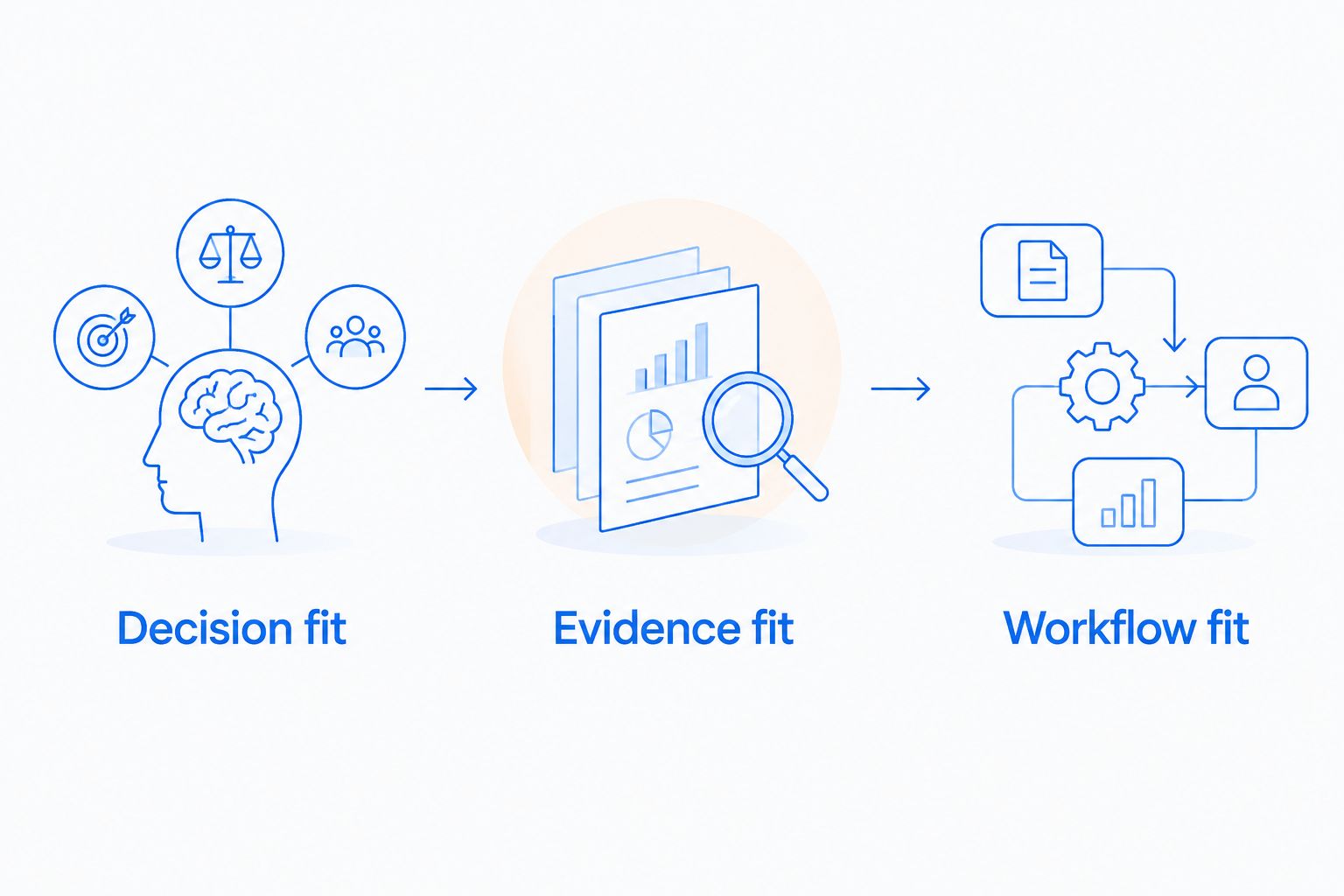
Use 3 decision gates before approving a replacement. The gates test whether the alternative answers your question, supports its conclusion, and fits your operating process. They are an evaluation method, not a product performance benchmark.
Decision fit
Write 1 budget question in plain language. For example: which campaign deserves reduced spend based on its contribution to qualified pipeline? A website dashboard and a budget recommendation should not receive the same score merely because both display campaign names.
Evidence fit
Review 1 closed reporting period using consistent definitions. Check the source records, outcome stages, attribution assumptions, and exclusions. Ask whether the tool distinguishes an observed relationship from an expected result; neither an attribution credit nor a recommendation proves incremental revenue.
Workflow fit
Write 1 reversal rule for the proposed change before approving it. Name the reviewer and the evidence that would trigger another review. For an agency, repeat this assessment for each client rather than assuming a shared advertising platform means a shared revenue workflow.
Keep the evaluation tied to an actual decision. A polished dashboard is not the acceptance criterion. The acceptance criterion is whether the reviewer can explain the recommendation, its confidence, its limits, and the conditions for reversing it.
For Getpaidlens budget recommendation software, the next step is private beta qualification. Confirm your required connections and review process before treating the product as part of a client delivery commitment.
Apply for the private beta
Bring your advertising sources, CRM requirements, and the budget decision you need to defend.
When staying with CaliberMind is the right call
Keep CaliberMind when attribution remains the main requirement and your team already turns its analysis into defensible decisions. A switch needs a specific benefit beyond a different interface or a new category label.
In 2026, separate the replacement question from the additional-workflow question. You can need better budget review without needing to discard an attribution process that meets your requirements. Assess the remaining gap before deciding whether the answer is replacement, supplementation, or better internal discipline.
FAQ
What's the best CaliberMind alternative for budget decisions?
Getpaidlens is the best fit in this shortlist for ranked, evidence-backed budget recommendations connected to CRM revenue. Confirm private beta suitability and the release status of your required integrations before committing.
Is HubSpot better than CaliberMind?
HubSpot is the better fit when your main requirement is reporting within a HubSpot-centered CRM workflow. CaliberMind remains relevant when dedicated B2B attribution and revenue analysis are the main requirements.
Can Salesforce replace CaliberMind?
Salesforce can address CRM-based pipeline and revenue reporting requirements, but that does not make it an automatic attribution replacement. Compare the marketing data, attribution questions, and reporting definitions you need.
Can Google Analytics replace B2B revenue attribution?
Google Analytics is not a standalone substitute for the complete CRM revenue lifecycle. Website acquisition and key events need to be connected to qualified pipeline and revenue before they support that broader decision.
What should an agency check before switching attribution tools?
An agency should check decision fit, evidence fit, and workflow fit for each client. Confirm source coverage, CRM definitions, reporting ownership, and who approves budget changes.
Do budget recommendations prove that revenue will increase?
No, a budget recommendation does not prove that revenue will increase. Review the evidence, expected impact, confidence, and limits, then define how the approved change will be evaluated.
When should I keep CaliberMind in 2026?
Keep CaliberMind in 2026 when its attribution workflow meets your requirements and your team already uses the analysis to make defensible decisions. Switch only to address a specific unmet requirement.
One last thing
Before your next product demonstration, ask the presenter to explain what would invalidate the conclusion. This question tests the evidence more directly than asking for another chart. A useful budget recommendation includes the conditions under which you should reject it.