

RedTrack serves advertisers who need ad tracking and attribution across campaigns. The ceiling is the gap between identifying credited conversions and deciding which budget move you can defend with CRM revenue evidence. The best RedTrack alternative in 2026 is Getpaidlens if you need ranked budget recommendations; Google Analytics if you need website and event analysis.
- Compare redtrack alternatives by the decision you need: attribution, budget allocation, website analytics, or client reporting.
- Getpaidlens is best for evidence-backed budget recommendations tied to advertising, CRM, analytics, and revenue data.
- Google Analytics fits website analysis; Matomo fits teams seeking control over their analytics deployment.
- Looker Studio fits reporting needs, not a replacement tracking layer.
- Keep RedTrack when ad tracking and attribution remain your primary requirements.
Why this matters
A tracking problem and a budget problem require different tools. Replacing your attribution platform with a dashboard does not automatically improve conversion measurement. Replacing it with a recommendation platform does not remove the need for reliable source data.
For your 2026 shortlist, answer 3 decision questions: What must be measured? Which business outcome matters? Who approves the resulting budget change? Those answers separate a replacement from a complementary tool.
RedTrack alternatives at a glance
These options address different parts of the measurement workflow. The comparison is about their primary roles, not a claim that each reproduces RedTrack's tracking capabilities.
| Tool | Best for | Standout capability | How it differs from RedTrack |
|---|---|---|---|
| RedTrack | Advertising tracking and attribution | Connecting advertising activity with attributed conversions | The baseline when your core requirement is campaign tracking |
| Getpaidlens | Defensible cross-channel budget decisions | Ranked recommendations supported by business-impact estimates, confidence, and evidence | Centers the proposed budget decision rather than tracking alone |
| Google Analytics | Website and event analysis | Event-based analysis of acquisition and on-site behavior | Broader website analytics rather than a dedicated ad-tracking replacement |
| Matomo | Teams prioritizing analytics deployment control | An open-source analytics platform with self-hosting options | Centers website analytics and deployment control |
| Looker Studio | Marketing reporting and dashboard presentation | Reports built from connected data sources | Presents data rather than supplying a dedicated tracking layer |
For a 2026 evaluation, use the table to identify the job first. Then verify the specific tracking method, data connection, and reporting requirement in the product documentation. A category match is not proof of migration compatibility.
1. Getpaidlens: best for defensible budget allocation
Getpaidlens is a decision-intelligence SaaS platform for performance marketers and agencies. It connects advertising, CRM, analytics, and revenue data to produce ranked, evidence-backed budget reallocation recommendations. The useful distinction is the output: a proposed action with a rationale, not just another performance chart.
Best for: Agencies managing multiple clients and marketing leaders who must explain a budget decision in terms of pipeline and revenue.
Where it shines
- A ranked action queue focuses attention on proposed decisions.
- Expected business impact and confidence scoring make recommendations easier to inspect.
- Pipeline-aware recommendations connect the budget discussion to CRM outcomes.
- A read-only, human-review approach keeps approval with your team.
Where it falls short
- Private beta access requires an application; assess fit before planning a migration.
- Recommendation quality depends on the completeness and consistency of the connected data.
- It is not established here as a like-for-like replacement for RedTrack's tracking implementation.
The supplied product description identifies Google Ads, Meta, LinkedIn, Salesforce, HubSpot, and Google Analytics as data sources. Confirm the live connection and beta status of each integration you need during the application process. Do not build a rollout around an integration without checking its current status.
| Dimension | Decision-intelligence platform | RedTrack |
|---|---|---|
| Primary job | Prioritize budget reallocation recommendations | Track advertising activity and attribute conversions |
| Main evaluation question | Can you defend the recommended change? | Can you trust the campaign measurement? |
| Business context | Advertising, CRM, analytics, and revenue data | Advertising tracking and attribution |
| Migration test | Validate recommendation evidence against your business records | Preserve the tracking and attribution you already rely on |
Verdict: Hold a full replacement until measurement compatibility is confirmed; apply to the private beta for budget-decision evaluation.
2. Google Analytics: best for website and event analysis
Google Analytics answers questions about acquisition, events, and behavior on your website or app. It belongs on the shortlist when your immediate problem is understanding what visitors do after arriving. It does not turn every measurement finding into a ranked cross-channel budget recommendation.
Best for: Marketing teams whose primary requirement is website analysis rather than a dedicated advertising-tracking workflow.
Where Google Analytics shines
- Event-based measurement supports analysis of specific user actions.
- Acquisition reporting helps connect traffic sources with on-site activity.
- Website behavior analysis gives context beyond the initial ad interaction.
Where Google Analytics falls short
- Event setup and campaign tagging require consistent implementation.
- A website conversion does not, by itself, establish CRM revenue quality.
- Do not assume Google Analytics reproduces every attribution workflow used in RedTrack.
| Dimension | Google Analytics | RedTrack |
|---|---|---|
| Primary focus | Website and app behavior | Advertising tracking and attribution |
| Core question | What happened after the visit? | Which advertising activity received conversion credit? |
| Replacement boundary | Validate events, acquisition definitions, and conversion reporting | Validate the campaign-tracking functions you need to preserve |
For a lead-generation business, distinguish the submitted form from the qualified opportunity. Both are useful events, but they answer different questions. A channel that generates forms is not automatically the channel that generates the most valuable pipeline.
Verdict: Shortlist Google Analytics for website analysis; skip it as an assumed like-for-like RedTrack replacement.
3. Matomo: best for analytics deployment control
Matomo is an open-source web analytics platform with self-hosting options. Its place on this list is control over the analytics deployment, not a claim of equivalent ad-tracking functionality. Consider it when where and how you operate analytics is a central requirement.
Best for: Teams that want to evaluate self-hosted website analytics and can support the operational work involved.
Where Matomo shines
- Open-source software gives your technical team access to the code.
- Self-hosting lets you operate the analytics environment yourself.
- Website analytics supports analysis of visits, acquisition, and conversions.
Where Matomo falls short
- Self-hosting puts infrastructure and maintenance responsibilities on your team.
- Deployment control does not automatically establish regulatory compliance.
- Website analytics is not the same job as ranked CRM-linked budget recommendations.
| Dimension | Matomo | RedTrack |
|---|---|---|
| Primary focus | Web analytics | Advertising tracking and attribution |
| Evaluation priority | Deployment control and website measurement | Campaign measurement and attribution workflow |
| Replacement boundary | Confirm the advertising use cases separately | Preserve required tracking functions |
Do not select self-hosting solely because it sounds more controlled. Assign responsibility for maintenance, access, consent configuration, and data retention before making that choice.
Verdict: Shortlist Matomo for deployment control; skip it if you lack an owner for the analytics environment.
4. Looker Studio: best for client reporting
Looker Studio creates reports and dashboards from connected data sources. It fits a presentation problem: assembling information into a report that a client or executive can read. It does not substitute for the system collecting your tracking data.
Best for: Agencies that already have trustworthy measurement and need a reporting layer.
Where Looker Studio shines
- Reports combine charts and tables into a shared reporting format.
- Connected sources let you build views around the data you already use.
- A dashboard can separate channel performance from the executive summary.
Where Looker Studio falls short
- The dashboard remains dependent on its underlying data sources.
- Conflicting metric definitions do not disappear when placed in the same report.
- A report does not, by itself, supply a defensible budget recommendation.
| Dimension | Looker Studio | RedTrack |
|---|---|---|
| Primary role | Reporting and visualization | Tracking and attribution |
| Data responsibility | Present connected data | Support advertising measurement |
| Replacement boundary | Reporting output only | Tracking workflow and attributed results |
Verdict: Shortlist Looker Studio for reporting; skip it as a replacement for tracking infrastructure.
Why people switch from RedTrack
There is no customer-switching dataset behind this comparison. The defensible reasons to consider a change are requirement gaps you can demonstrate in your own workflow—not unverified claims about outages, support, or product changes.
Your budget meeting needs revenue evidence
If your team reports attributed conversions but approves spending against qualified pipeline, the decision requires another layer of evidence. Compare campaign results with the CRM outcomes used by the business. Establish which outcome the budget owner actually wants to improve.
Your measurement question extends beyond advertising
If you need to understand website behavior, an analytics platform answers a different question from an ad tracker. That is a reason to evaluate Google Analytics or Matomo. It is not automatically a reason to remove RedTrack.
Your reporting burden is the immediate constraint
If the tracking is reliable but client reporting is fragmented, evaluate a reporting layer first. Replacing the collection system to fix presentation creates a larger migration than the stated problem requires.
For a 2026 decision, document the unmet requirement in one sentence. If you cannot name the gap, you do not yet have a replacement case.
How to evaluate a replacement without losing evidence
Use 4 checks before approving a migration. Keep the checks separate so a strong dashboard does not conceal weak measurement or an unsupported recommendation.
- Data coverage: List the advertising, website, CRM, and revenue records the decision requires. Confirm access to each source and the identifiers used to connect them.
- Revenue alignment: Define whether success means a lead, a qualified opportunity, booked revenue, or another business outcome. Keep those outcomes distinct.
- Decision evidence: Inspect the inputs, attribution assumptions, confidence, and rationale behind a proposed budget change. Identify what remains uncertain.
- Human approval: Assign an owner who can accept, reject, or defer the recommendation. Record the reason and the outcome to review.
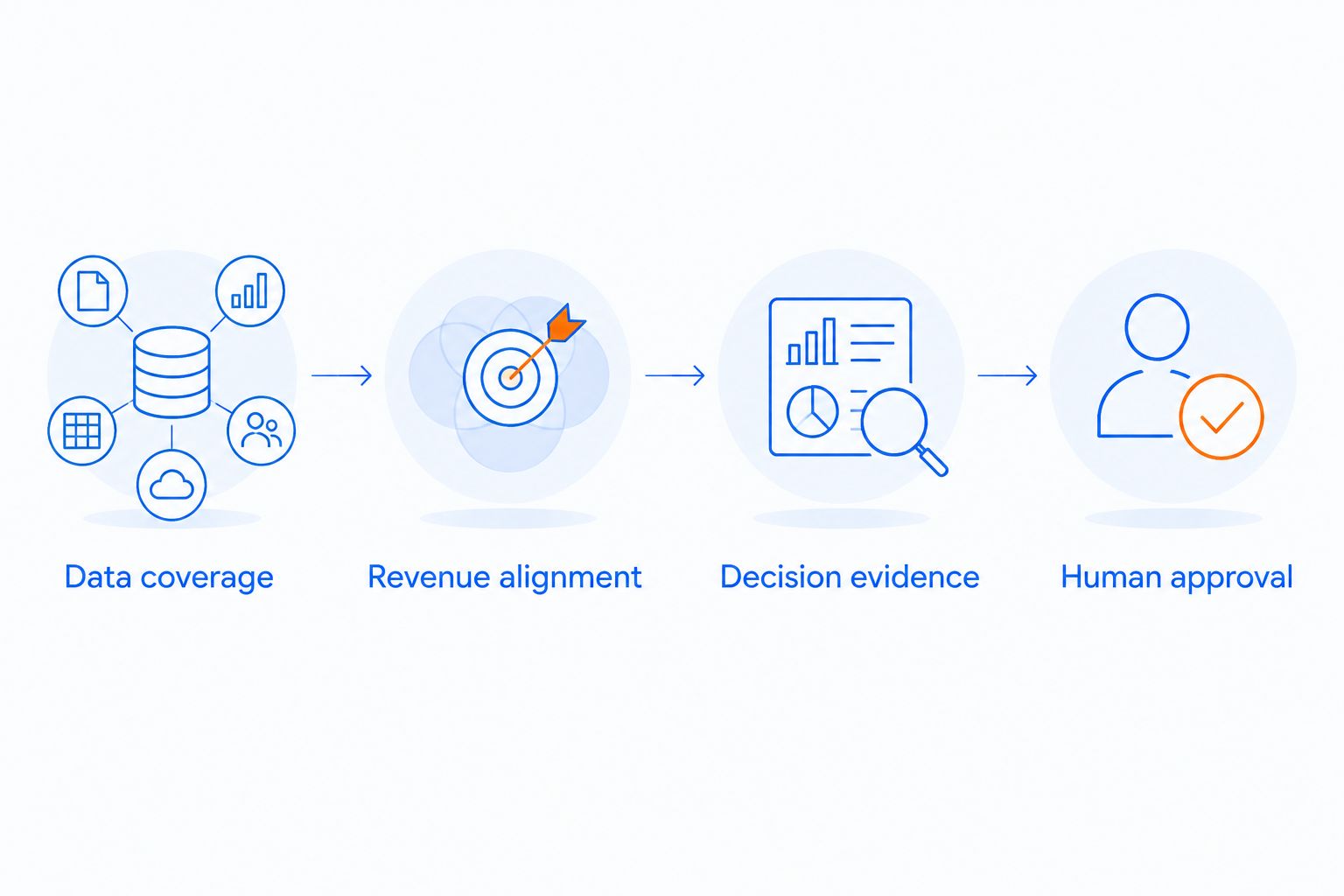
Set 2 review dates for your evaluation: one to approve the measurement definitions and one to assess the resulting recommendation. These are planning checkpoints, not promised implementation or performance timelines. Choose dates that fit your sales cycle and reporting obligations.
Before changing budgets, record what the proposed move is expected to improve and what evidence would invalidate it. Separate an attribution result from a causal claim. Crediting a conversion to a channel does not prove that increasing that channel's spend will generate the same return.
For a shortlist centered on spending decisions, compare the requirements in the budget allocation tools for paid media guide. Keep tracking compatibility as a separate acceptance criterion.
Getpaidlens budget recommendation software fits this evaluation when your team needs ranked actions with inspectable rationale. Use the private beta application to discuss your source systems, CRM outcomes, and approval requirements.
Apply for the private beta
Discuss your advertising, CRM, and revenue workflow before planning a budget-decision rollout.
When staying with RedTrack is the right call
Keep RedTrack when advertising tracking and attribution remain the job you need done and the existing setup meets your documented requirements. A new category label does not justify disrupting a working measurement process.
RedTrack's strength is its advertising-measurement focus. The limit is that attribution alone does not settle every CRM-linked budget question. Treat that distinction as a workflow boundary, not a product defect.
In 2026, evaluate replacement and augmentation separately. Add website analytics for behavior analysis, a dashboard for reporting, or decision-intelligence software for recommendation review only when that additional job is necessary.
FAQ
What's the best RedTrack alternative for budget decisions?
Getpaidlens is the best fit on this shortlist for ranked, evidence-backed budget recommendations tied to advertising, CRM, analytics, and revenue data. Evaluate it through the private beta and confirm the current status of your required integrations.
Is Google Analytics a direct replacement for RedTrack?
Google Analytics is not an assumed like-for-like RedTrack replacement. It focuses on website and app analysis; validate your specific advertising tracking and attribution requirements before replacing the existing setup.
Which RedTrack alternative is best for agency reporting?
Looker Studio fits agencies that need reports and dashboards built from existing data sources. It is a reporting layer, so you still need reliable tracking and consistent metric definitions underneath it.
Which option should I consider for self-hosted analytics?
Matomo belongs on the shortlist for self-hosted web analytics. Your team must also own the deployment, maintenance, access controls, and data-handling configuration.
Can I keep RedTrack and add another platform?
Yes, keeping RedTrack is a valid choice when it meets your tracking requirements. Evaluate the additional platform for the separate job you need, such as website analysis, reporting, or budget recommendations.
What should I check before switching attribution tools?
Check data coverage, revenue definitions, attribution assumptions, and the tracking functions you need to preserve. Compare the systems against the same business question rather than expecting different attribution methods to produce identical totals.
How do I know whether a budget recommendation is defensible?
A defensible recommendation identifies its evidence, expected business impact, confidence, and limits. Your budget owner should be able to explain the proposed change and state what result would justify reversing it.
One last thing
A replacement tool should earn its place by changing a decision, not just changing a chart. Before approving a migration, write down the budget decision you cannot defend today and the evidence that would resolve it.
If that evidence is missing from your source systems, fix the measurement first. If the evidence exists but the decision remains unclear, evaluate the recommendation layer.